Table Of Content

This project allows the user to compute the volume and surface area of boxes, when s/he inputs the length, width and height of a box. The user can continue to enter the dimensions of new boxes until s/he is done. Also, functions with hardware interfaces are tested with their hardware.
F&Q (Frequently Asked Questions) on Mastering Top-Down Design Techniques
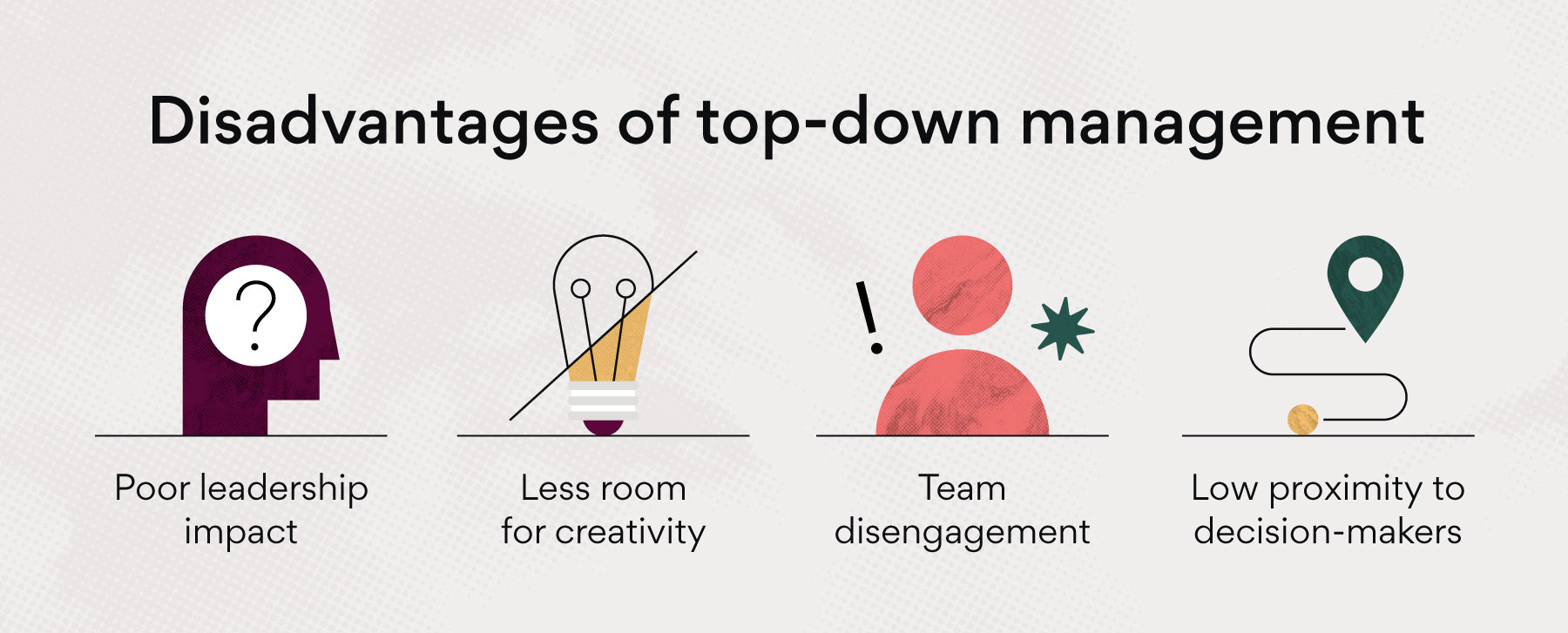
The bottom level contains only gates and macrofunctions which are vendor-supplied high level functions. Fortunately, schematic capture software and hardware description languages used for chip design easily allows use of the top-down design methodology. While a bottom-up approach allows decisions to be made by the same people who are working directly on a project, the top-down style of management creates distance between that team and decision-makers. This can lead to poorly-informed decisions if leadership doesn’t ask for input or feedback from their project team.
Complex surfaces in assemblies
Even a small program can seem to have toomany parts for beginning programmers. Quite often, novices feel that they really don'tknow how to get started. A top down design is the best defense against confusion andchaos. It is a disciplined model for designing programs that allows even the largestprograms to be broken into manageable pieces. A completed design also provides a means of comparing the specifications and theprogram function realistically before you start the coding phase.
What to look for in a four-slice toaster
The buttons are intuitive, and the crumb tray is accessible from the front for easy emptying. While it lacks the user-friendliness of more expensive models, the Hamilton Beach Classic 4 Slice Toaster browns quickly and achieves accurate shading at a budget price. When it comes down to it, effective managers know how to balance the efficiency of the top-down approach with the collaborative and creative advantages that come from the entire team.
Assemblies with complex geometries or surfaces that span part breaks are excellent candidates for master modeling. Such designs are typical for injection molded or cast components. Common examples include ergonomic tool handles and organically shaped computer mice where many parts need to match the same external surfaces. Looking to increase efficiency and control in your next CAD project? Use this guide to streamline your design process through master modeling. Top down design evolved from designers making assembly references from one part to another, where upon, submission to PDM tools of the time filled up the relatively small hard drives (circa 1993).

Steps in Top Down Design
To improve your skills in Top-Down Design, you can practice by solving various problems using this approach. Start with simple problems and gradually move on to more complex ones. Additionally, studying examples of Top-Down Design in action and seeking feedback from peers can also help in enhancing your skills. The leaves of the tree are self-contained methods that do not need to invoke other methods (except perhaps System.out.println() and the like) such as task3. In any given node, you should assume that all other methods work or will become available--focus solely on the sequence of steps taken by that method. Communication is key, whether you’re discussing project requirements with your team or negotiating which movie to watch with friends 🍿.
Software development
Infact, since we know that the digits form an ordered sequence within the character set, itis relatively easy to see that if we subtract the code for '0' from the code for anydigit, we will derive its numeric value. The idea behind a top down design is to first divide the work that a program willperform into a small number of broad subtasks. For most programs, we would expect anywhere from about three to six or sevensubtasks at this level. For smaller programs, the number of subtasks should be at the lowend of this range.
Top-Down Construction: Engineering Solution Reduces Costs and Carbon - Urban Land
Top-Down Construction: Engineering Solution Reduces Costs and Carbon.
Posted: Mon, 10 Jul 2023 07:00:00 GMT [source]
Why is Top-Down Design important in programming?
I encourage you to experiment with this technique on your next project. While it does require a little more effort on the front end while setting up the master, the benefits far outweigh the downsides. As with everything in life, there are trade-offs and I would be remiss if I didn’t point out several disadvantages inherent to utilizing a master model. Timestamp – A Creo surface copy that offers one degree of separation for the published geometry to utilize. These are often used by the most experienced user in the company who also creates the skeleton part.
Teams
Information hiding is an old old concept that got incorporated intoobject-oriented design. The idea is simply to reduce what you have tothink about at one time per design goal mentioned above. In terms ofobjects, it means that you do not expose your implementation, justsome well-behaved methods that provide a service to other objects. Interms of functional decomposition, it means that each method should bejust a few references to other methods, which in turn reference a fewmethods until you get to an atomic operation.
Top–down is a programming style, the mainstay of traditional procedural languages, in which design begins by specifying complex pieces and then dividing them into successively smaller pieces. The technique for writing a program using top–down methods is to write a main procedure that names all the major functions it will need. Later, the programming team looks at the requirements of each of those functions and the process is repeated. These compartmentalized subroutines eventually will perform actions so simple they can be easily and concisely coded.
Since this is true, it is a good idea to get into thehabit of designing, rather than hacking, your programs from the verybeginning, even though the design phase may seem like a waste of time to you. Top-Down Design is important in programming because it helps in making the problem-solving process more manageable and organized. By breaking down a problem into smaller parts, programmers can focus on understanding and implementing one part at a time, leading to clearer code and easier debugging. No, Top Down Design is just one of the many problem-solving approaches in programming. Other approaches include Bottom Up Design, Object-Oriented Design, and Agile Development methodologies. Each approach has its strengths and weaknesses depending on the project requirements.
Early in the development process the design and requirements are still fluid. Top-down design is an efficient way to quickly cycle through multiple concepts with a minimal amount of tedious design effort. Even after considering these caveats, the benefits of using a master model outweigh the disadvantages for nearly every project we work on at M3 Design.
After putting bagels in the wrong direction several times, we discovered that the Cuisinart toasts bagels better when facing outward instead of toward the middle. Lastly, the crumb tray is only accessible from the back, so you may have to pull it away from the wall to clean it. In top-down processes, there are fewer opportunities for teams to give input or suggestions. Collaborative approaches like the bottom-up approach, on the other hand, create opportunities for feedback, brainstorming, and constructive criticism that often lead to better systems and outcomes. In collaborative settings, those who work directly on projects and oversee project management can speak to the decisions that will impact their future work.
The key to implementing a management approach that works is to invest in your people as much as you do in your processes. The challenges of the top-down management approach can be alleviated or even eliminated entirely if the people at the top of the process aren’t just good managers, but are leaders too. The bottom-up approach encourages greater buy-in from team members because everyone is given the opportunity to influence decisions regardless of seniority. It also facilitates better relationships between colleagues by offering members of all seniority levels an equal opportunity to influence project outcomes.
Brief History of Top Down DesignBottom–up / top–down Both strategies of information processing and ordering knowledge, used in a variety of fields including engineering made popular by PTC with Creo as early as 1990. Write a program to print the sum of the sum of the digits of each even number in aninput file, then to print the smallest number in the file and the largest number in thefile. Assume the file contains only positive numbers and that no number is larger than1000. Once finished, these modules (‘chunks’) of code are all put together to form the main program.
Checkout computes the total payable amount by summing up the final prices of products in the cart. Top-down design helps in organizing and structuring your code in a logical and easy-to-understand manner. It allows you to focus on one part of the problem at a time, making it easier to tackle complex issues. Top–down design is a problem-solving and design strategy where you break down a system into smaller, more manageable parts. Starting from the highest level of abstraction, you gradually refine the details until you have a complete solution.


No comments:
Post a Comment